





Sector: Heliophysics/Space weather
Number of satellites: 1
Form factor: 6U-XL
Solar flares, together with coronal mass ejections, can pose a serious risk to the functioning of both orbiting and ground-based electronic and electrical devices. Hard X-ray polarimetry offers a unique observational window into the mechanisms responsible for particle acceleration and the evolution of magnetic configurations during solar flares. Investigating the mechanisms driving these events is essential for refining current models of solar activity and its influence on the heliosphere, contributing to more accurate space weather predictions and to the mitigation of risks to satellite systems, communication infrastructures, and terrestrial power grids.
The CUSP (CUbesat Solar Polarimeter) mission, operating from a 500 km Sun-synchronous orbit, will host a dual-phase Compton scattering polarimeter to measure the linear polarization of 25-100 keV X-rays generated by solar flares. CUSP will thus contribute both to the study of heliophysics and to the enhancement of Space Weather networks for the prediction and investigation of violent solar phenomena. During Phase B, the preliminary reference design of the system was evaluated, and key tests were carried out to verify the functionality of the payload technology.
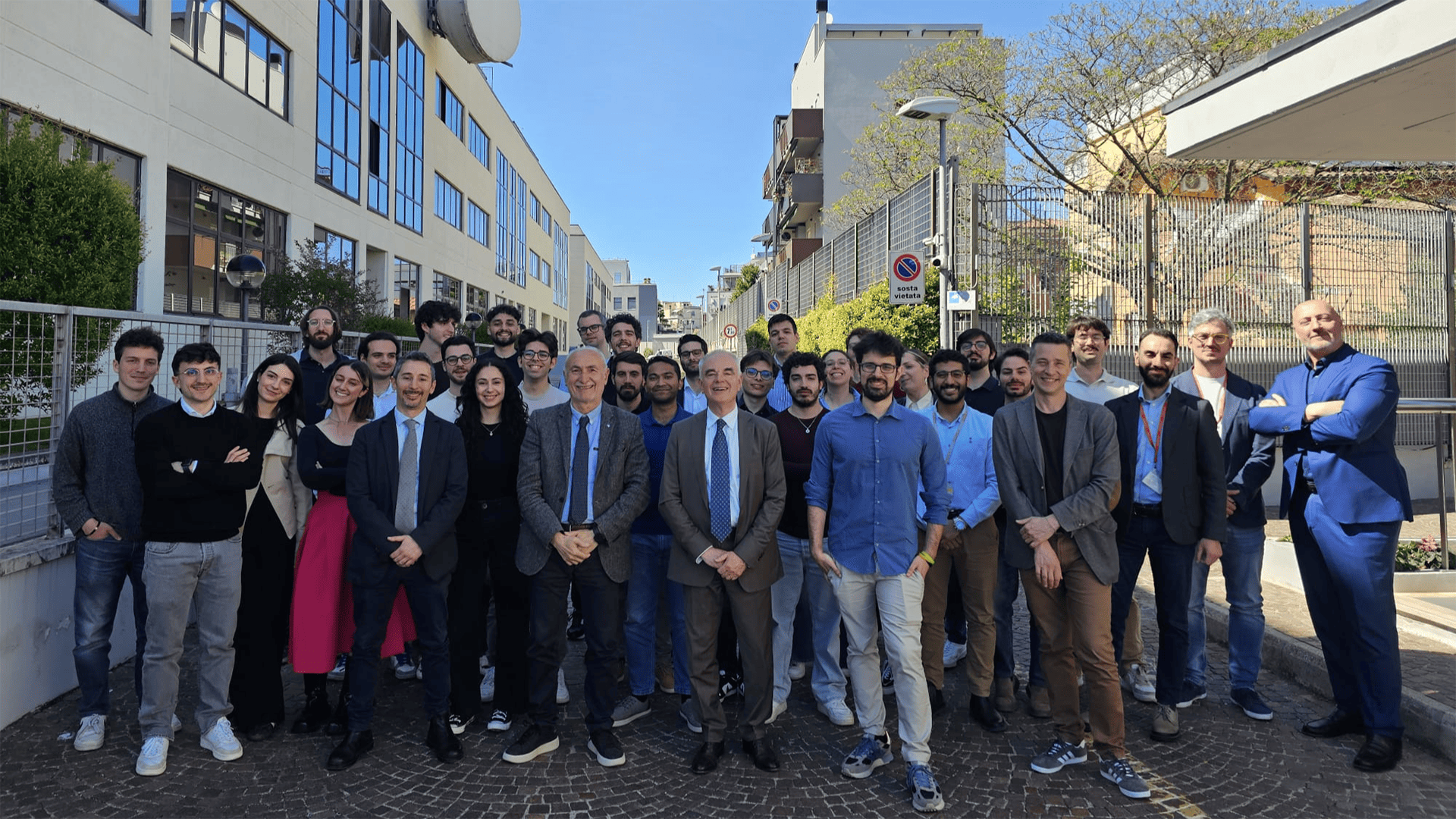
The team proposing and implementing the mission is composed of research institutions, universities, and companies. INAF-IAPS is responsible for the realization of the scientific instrument in collaboration with Deda Connect s.r.l.; IMT s.r.l. is responsible for the realization of the CubeSat platform; University of Bologna – CIRI Aerospace is responsible for the Mission Study; and University of Tuscia is responsible for the ground station. The Italian Space Agency’s Space Science Data Center will provide the infrastructure and services to host the mission’s Science Operation Center.
Development team: INAF-IAPS (Prime); IMT S.r.l.; CIRI Aerospace – Alma Mater Studiorum – Università di Bologna; Deda Connect S.r.l.; Università degli Studi della Tuscia.
Development status: Phase B (preliminary design) closed.