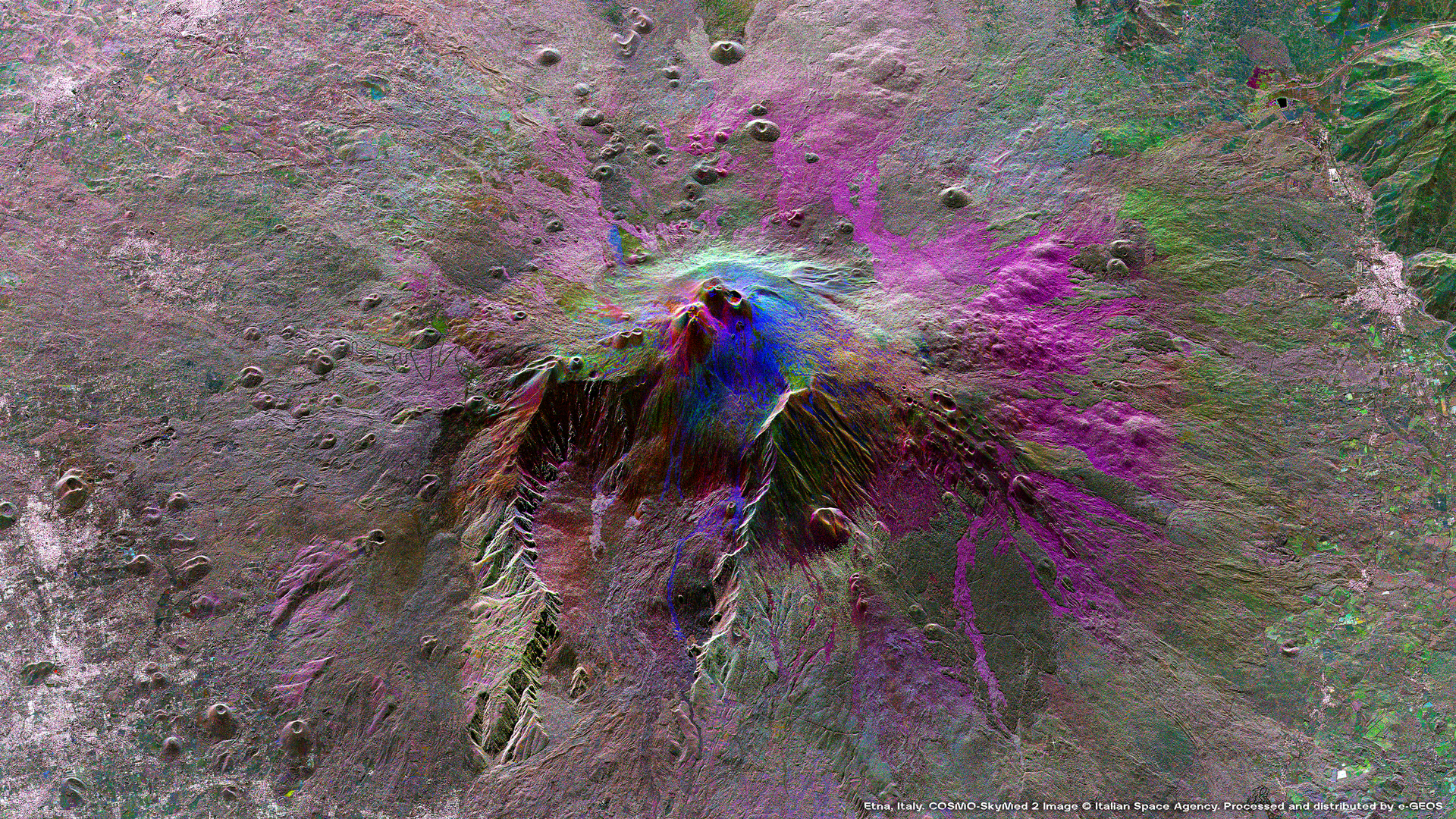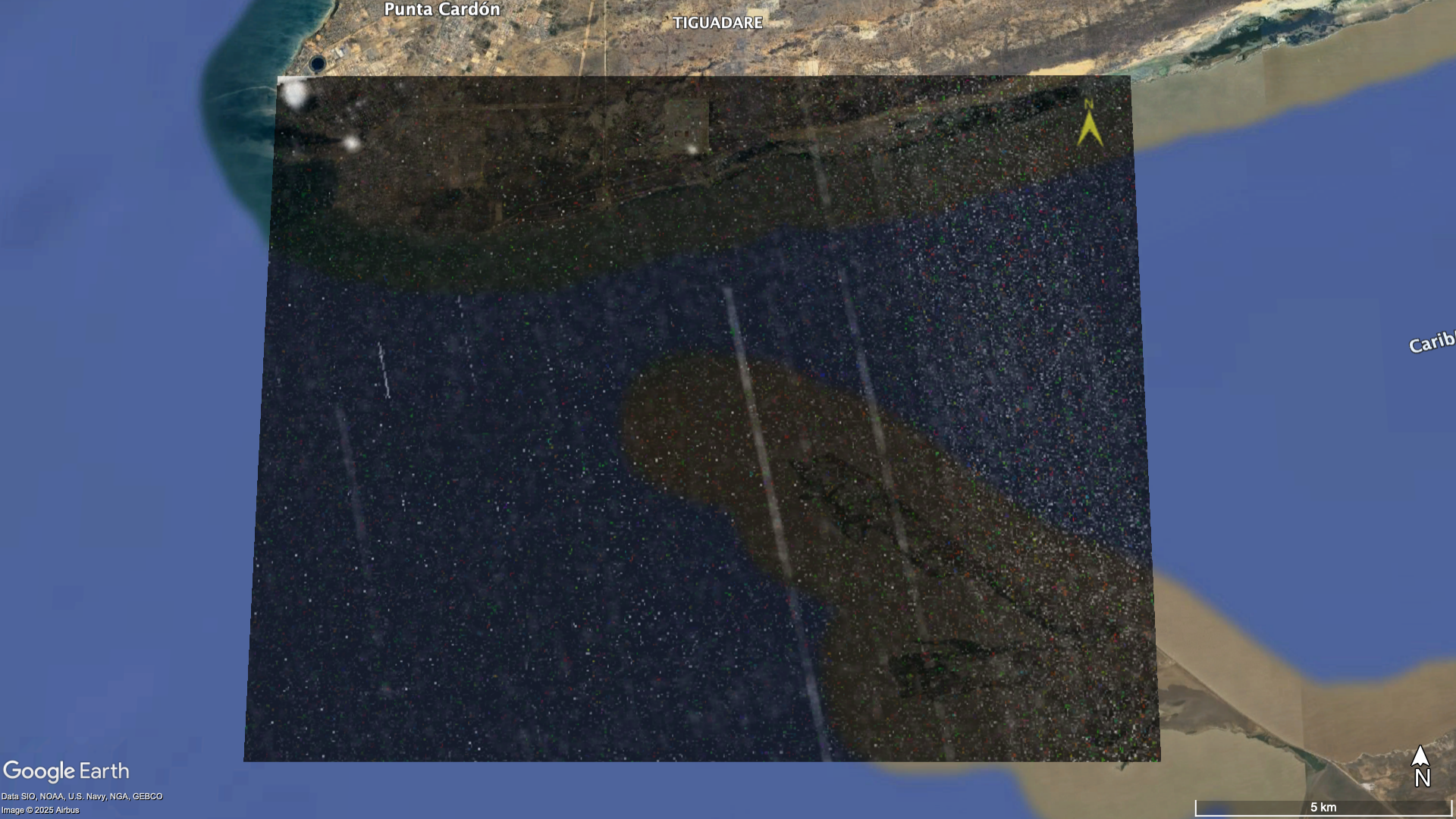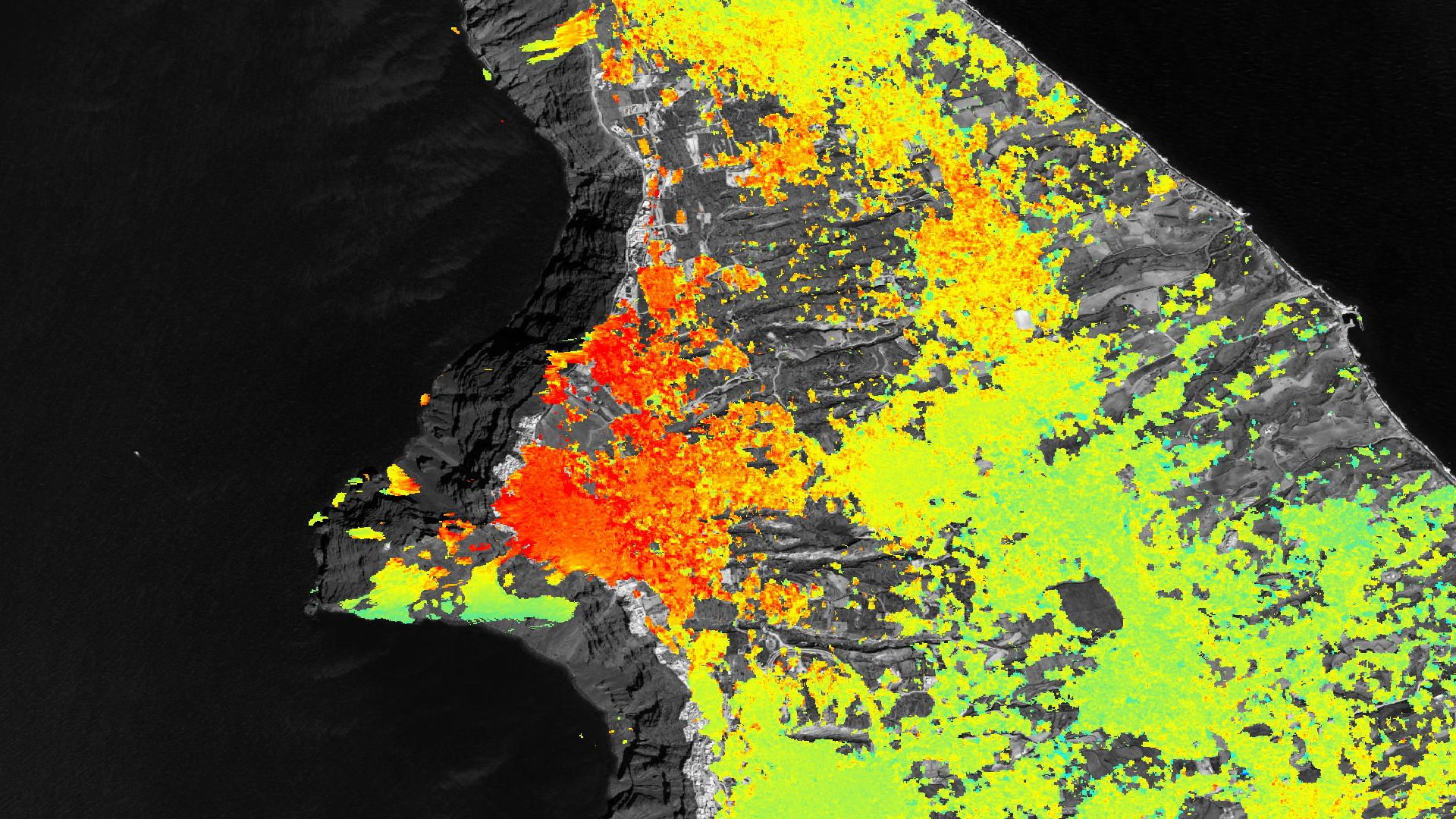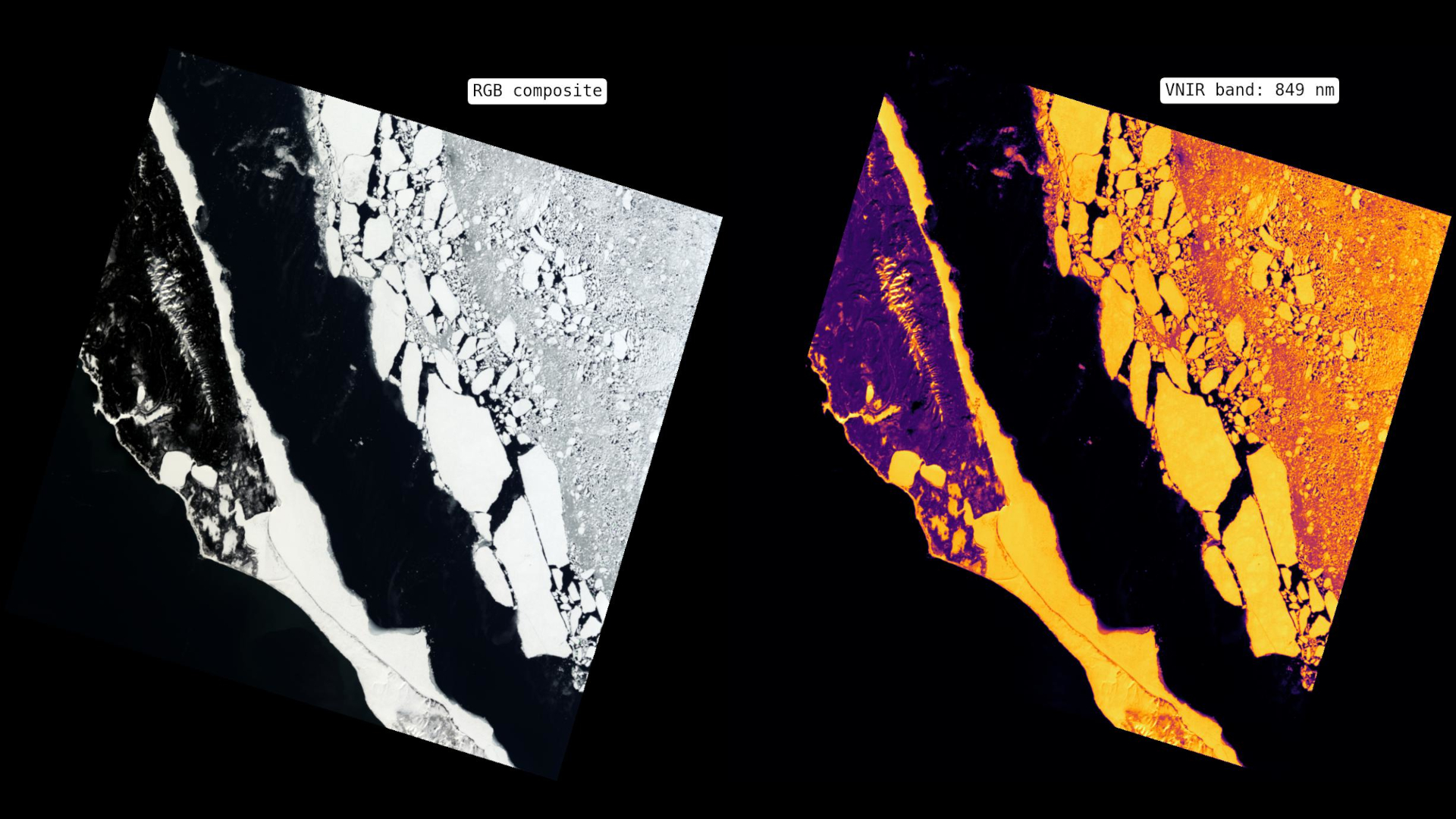






Satellite data, new technologies, and international cooperation to improve prevention and management of natural hazards: this was the focus of the International Workshop dedicated to the use of Earth Observation (EO) data and technologies to support Natural Disaster Risk Management, held on September 16 at the Italian Space Agency (ASI)’s headquarters in Rome.
Jointly organised by ASI’s Earth Observation Office and the Working Group on Disasters (WGD) of the Committee on Earth Observation Satellites (CEOS), the workshop brought together a broad and active national and international community:
- 33 oral presentations
- 37 posters
- more than 70 in-presence participants
- more than 90 participants from remote
- representatives from the main CEOS member space agencies, including CNES, CONAE, CSA, DLR, ESA, ISRO, ROSA, UKSA, UNOOSA, VNSC
- a wide spectrum of international organisations and institutes working in the field of EO data, products and space studies, including the UN Environment Programme (UNEP) International Methane Emissions Observatory (IMEO), Instituto de Estudios Espaciales de Cataluña (IEEC), Icelandic Met Office (IMO), Aerospace Information Research Institute - Chinese Academy of Science (AIRCAS), National Observatory of Athens (NOA), Remote Sensing Technology Center of Japan (RESTEC), ERATOSTHENES Centre of Excellence, and several members of GEO Geohazard Supersites and Natural Laboratory initiative (GSNL)
- professors, researchers and PhD students coming from universities – Sapienza University of Rome, University of Rome Tor Vergata, Roma Tre University, University of Florence, University of Pavia, University of Naples “Parthenope”, University of Bari “Aldo Moro”, University of Trento – and research bodies – National Research Council (CNR) of Italy, Institute of Geosciences (GEO), Institute for Electromagnetic Remote Sensing of the Environment (IREA) and Institute of Atmospheric Sciences and Climate (ISAC), EURAC Research, National Institute of Geophysics and Volcanology (INGV) – across Italy
- Institutional bodies such as the Italian National Fire Corps (CNVVF) and ANAS
- a high number of Italian companies working in the EO downstream sector such as GMATICS S.r.l. Italy, Serco Italia S.p.A., Planetek Italia S.r.l., AizoOn Technology Consulting Italy S.r.l., Starion Group Italia S.p.A., CALHYPSO
The above numbers and the variety of participants confirm that there is a distributed and multidisciplinary network of scientists, EO specialists, users and space agencies that, altogether, are able to cover and are in charge of all phases of DRM.
Nowadays, this community exploits EO data and technologies, develops novel solutions to address real scenarios and specific user requirements, shares best practices and protocols, and contributes to the growth of this vital downstream sector, fostering EO adoption and integration within operational workflows by institutions and final users.
The workshop was opened by Francesco Longo, ASI’s Head of the Earth Observation Office and CEOS Principal, who recalled how crucial EO-based applications for DRM are in the context of ASI’s downstream portfolio. Since several years ASI has been constantly committed to support CEOS initiatives and, in particular, the WGD. CEOS is among the international initiatives that mostly prove the added value that can be generated through cooperation and synergy between space agencies, institutions and users.
This message was echoed by Lóránt Czárán, Chief of the Space Applications Section at UNOOSA and CEOS WGD Chair. CEOS WGD fully supported the proposal of organising a joint workshop as part of the meeting week that the Working Group typically holds in September.
The workshop provided an excellent opportunity to open WGD activities to the international community, present their own activities and projects, and stimulate future engagement of new partners and collaborators. At the same time, the workshop was a forum to discuss the state of the art of EO technologies, methods, algorithms and prototype products. Finally, Dr. Czárán expressed appreciation for the wide participation of young researchers and students among the oral and poster presenters. They can play a key role in innovating and bringing new ideas and energy to strengthen the CEOS WGD and, more in general, EO sector in support to DRM.
The first session of the day, moderated by Antonio Montuori, ASI CEOS WGD Vicechair and PoC, and Deodato Tapete, ASI Program Scientist and Deputy in CEOS WGD, allowed delegates to know about the activities run by CEOS member space agencies and collaborators, as well as international initiatives such as The International Charter: Space And Major Disasters.
Presentations were delivered by representatives from ASI, NASA, ESA, DLR, IEEC, ERATOSTHENES Centre of Excellence and RESTEC (Figure 1).
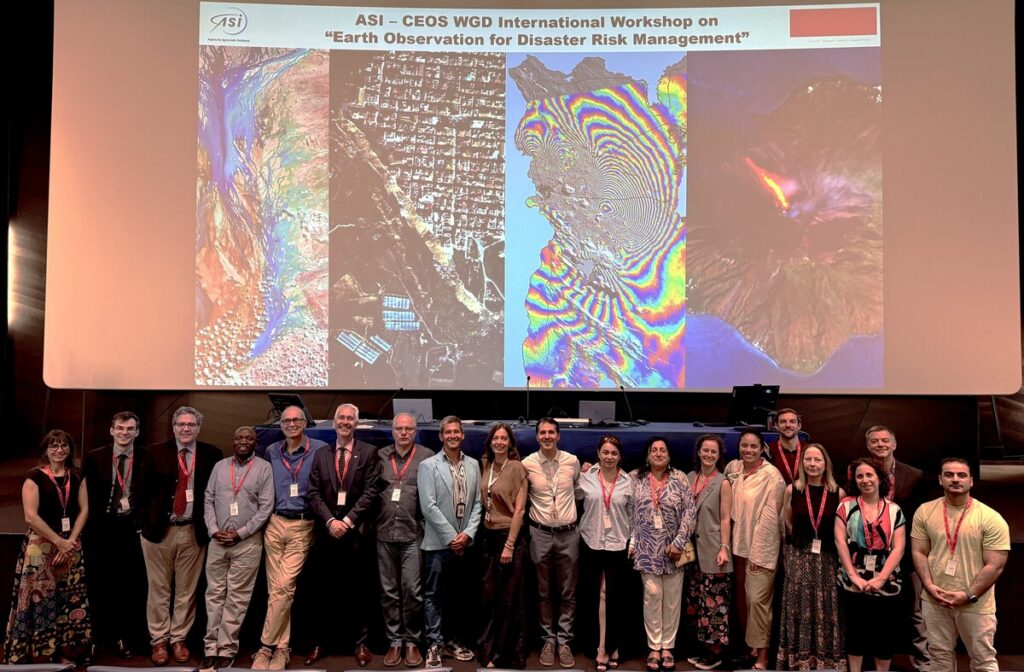
Figure 1. Group photo after the first session of the workshop. From left: Raquel Rodriguez Suquet and Aurélien Sacotte (CNES), Marcelo Uriburu Quirno (CONAE), Charles Balagizi (Goma Volcano Observatory and GSNL), Stefano Salvi (INGV and GSNL), Andrew Eddy (CEOS WGD Secretary), Lóránt Czárán (UNOOSA and CEOS WGD Chair), Antonio Montuori (ASI and CEOS WGD Vicechair), Simona Zoffoli (ASI, Head of User Coordination, Data Policy and Downstreaming Sector and ASI CEOS PoC), Deodato Tapete (ASI, Program Scientist and Deputy in CEOS WGD), Lilit Minasyan (DRR National Platform Armenia), Silvia Liberata Ullo (Uni Sannio), Eleanor Pierel and Ayia Lindquist (NASA), Zachary Foltz (ACRI-ST c/o ESA, CEOS Seismic Risk Initiative), Michelle Parks (Icelandic Met Office and GSNL Chair), Daniele Giordan (CNR-GEO), Chiara Lanzi (Icelandic Met Office) and Davoud Omarzadeh (Instituto de Estudios Espaciales de Cataluña).
The second part of the workshop was made of 5 thematic sessions focused on the following natural hazards and application topics:
- wildfires and forestry
- landslides
- floods and drought
- earthquakes and building damage assessment
- processing and application platforms
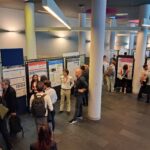
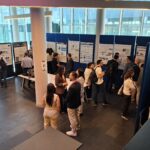
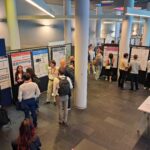
The same themes were then further deepened during the poster session, that included a record number of posters (Figure 2).
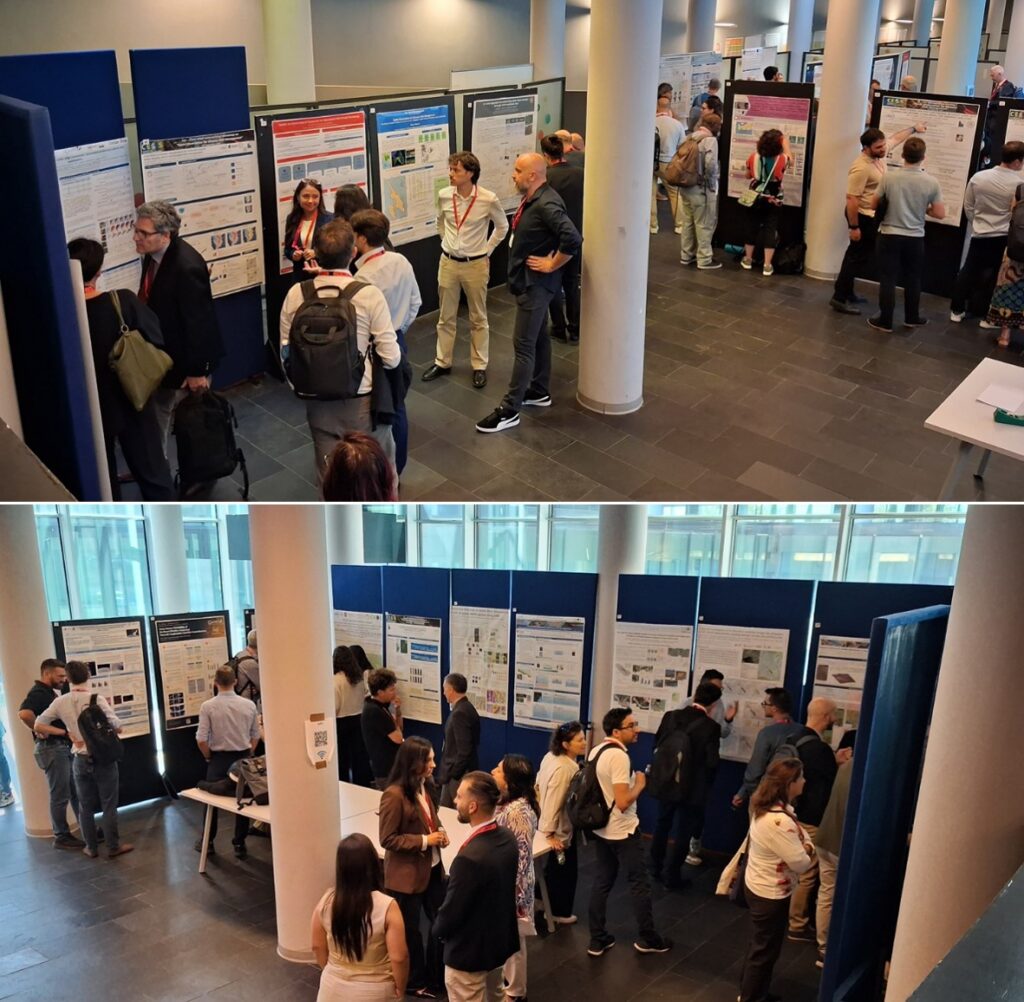
Figure 2. Some moments taken during the poster session of the International Workshop held in the hall in front of ASI’s canteen.
For all the details about the scientific and technical content, please refer to:
Scientific-technical programme
Slides of the oral presentations
Video-recording of the workshop
Main take-home messages
- Access to EO data is crucial, alongside the investment in ensuring that EO missions are kept operational and are expanded with new satellites, so to continue addressing not only emergency phases but also the whole DRM cycle (from preparedness and mitigation to monitoring of the reconstruction and recovery processes);
- Pre-event datasets are always helpful and fundamental. In this respect, regular acquisition plans (e.g. background missions and dedicated observation scenarios) are key assets to provide the needed data to be ready when a disaster hits a territory and its communities. At the same time, it is important to continue developing novel algorithmic solutions to make best use of post-event imagery, especially when pre-event data are missing;
- Ensure EO imagery is of good quality and suits the purpose;
- Need for more accurate and spatially distributed ground truth and benchmark datasets;
- To this purpose, cooperation with universities and research bodies is strategic and facilitates the technological transfer and innovation of operational workflows;
- New services, platforms, Digital Twins need to be co-designed with end users;
- Their adoption and inclusion in operational workflows by end users require trust building and focused capacity building actions.
Photo-gallery
-
- 1
-
- 2
-
- 3
-
- 4
-
- 5
-
- 6
-
- 7
-
- 8
-
- 9
-
- 10
-
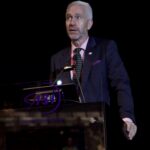
- 11
-
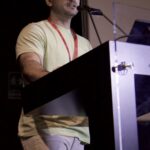
- 12
-
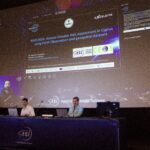
- 13
-
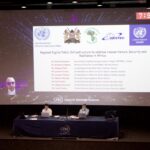
- 14
-
- 15
-
- 16
-
- 17
Captions:
01 From left: Deodato Tapete (ASI, Program Scientist and Deputy ASI for CEOS WGD) and Antonio Montuori (ASI, CEOS WGD Vice-chair) at the beginning of the workshop.
02 Group picture at the end of the workshop first session. From left: Raquel Rodriguez Suquet and Aurélien Sacotte (CNES), Marcelo Uriburu Quirno (CONAE), Charles Balagizi (Goma Volcano Observatory and GSNL), Stefano Salvi (INGV and GSNL), Andrew Eddy (CEOS WGD Secretariat), Lóránt Czárán (UNOOSA and CEOS WGD Chair), Antonio Montuori (ASI, CEOS WGD VIcechair), Simona Zoffoli (ASI, Head of the User Coordination, Data Policy and Downstreaming Sector and ASI CEOS PoC), Deodato Tapete (ASI, Program Scientist and Deputy ASI for CEOS WGD), Lilit Minasyan (DRR National Platform Armenia), Silvia Liberata Ullo (Uni Sannio), Eleanor Pierel (NASA), Ayia Lindquist (NASA), Zachary Foltz (ACRI-ST c/o ESA, CEOS Seismic Risk Initiative), Michelle Parks (Icelandic Met Office and GSNL Chair), Daniele Giordan (CNR-GEO), Chiara Lanzi (Icelandic Met Office) e Davoud Omarzadeh (Instituto de Estudios Espaciales de Cataluña).
03 Francesco Longo (ASI, Head of the Earth Observation Office and ASI CEOS Principal) during the introductory remarks
04 Lóránt Czárán (UNOOSA, CEOS WGD Chair) during the introductory remarks
05 Antonio Montuori (ASI, CEOS WGD Vice-chair) outlines the activities of the CEOS Working Group on Disasters
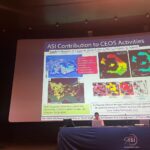
06 A moment during the presentation by Antonio Montuori (ASI, CEOS WGD Vice-chair) on ASI’s activities within the CEOS Working Group on Disasters
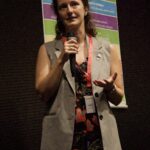
07 Eleanor Pierel (NASA) outlines NASA’s priorities during its current chairmanship of the CEOS Strategic Implementation Team (SIT) and the NASA Disasters Program
08 Zachary Foltz (ACRI-ST c/o ESA) outlines the technical and operational innovation, coordination actions, and capacity-building activities within the framework of The International Charter: Space and Major Disasters
09 Philippe Bally (ESA, representative on the Executive Secretariat of the International Charter ‘Space and Major Disasters’) during a discussion
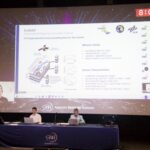
10 A moment during Samuel Stettner’s (DLR) presentation on the initial operational experiences of the EnMAP hyperspectral satellite in activations of the International Charter ‘Space and Major Disasters’
11 Andrew Eddy (Athena Global) outlines the Copernicus Regional Centre initiative in Panama (CopernicusLAC), its development phases, services, and use cases.
12 Davoud Omarzadeh (Institute of Space Studies of Catalonia – IEEC) outlines the activities of the IEEC and the growing role of small Earth observation satellites in Catalonia's disaster risk management strategy
13 A moment during the presentation by Marios Tzouvaras (ERATOSTHENES Centre of Excellence and Cyprus University of Technology) on the NADI-RISK methodology, which utilizes Earth observation data and geospatial datasets for risk assessment and mitigation
14 A moment during the presentation by Remi Chandran (Remote Sensing Technology Center of Japan – RESTEC) on the proposal for Regional Digital Public Infrastructure (DPI) for Human–Nature Security and Resilience in Africa, promoted by the Lusaka Agreement Task Force, the Government of Kenya, UNOOSA, UNGSC, and RESTEC
15 - 16 - 17 Moments during the workshop's poster session