






Sector: Planetary exploration/Space Radiation
Number of satellites: 1
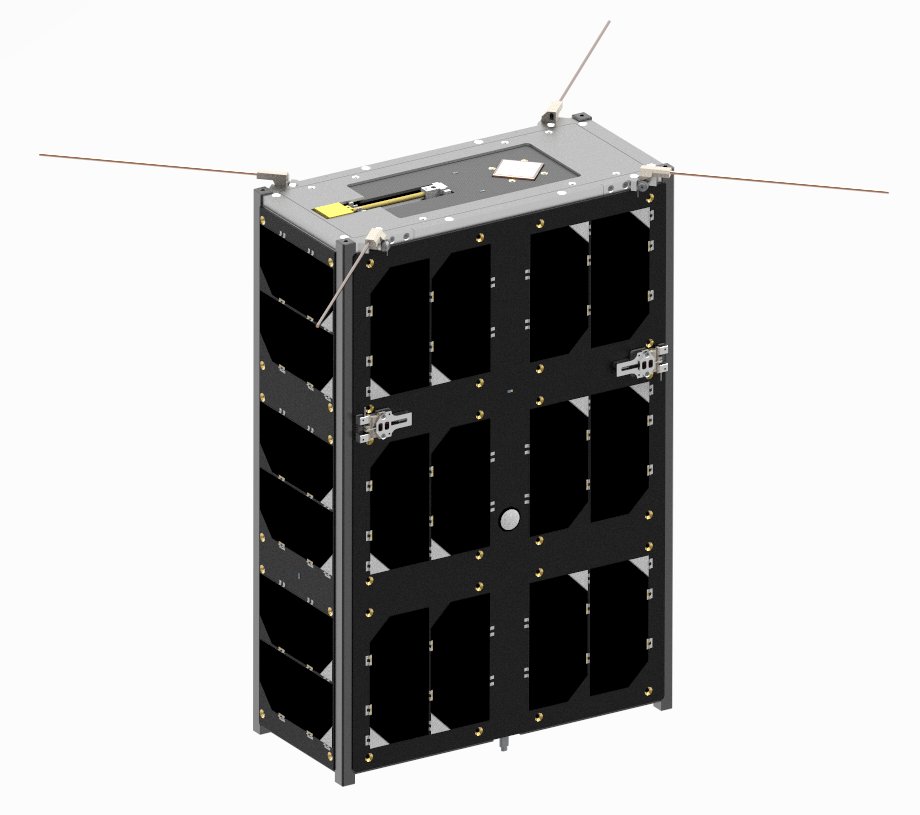
Form Factor: 6U
Interplanetary missions venturing beyond the magnetopause do not benefit from the natural protection provided by the Earth's magnetic field against radiation harmful to electronic components. For small interplanetary missions, it is therefore crucial to maximize the use of low-cost components that can guarantee operation in high-radiation environments. The RAMSESS (RAdiation Measurement Sensor with Enhanced Sensibility for Space exploration) mission plans to launch a CubeSat into a terrestrial polar orbit, maximizing the radiation load for Earth orbits, for the technological validation of an innovative cosmic radiation sensor. The sensor is a dosimeter based on the CdZnTe semiconductor, capable of simultaneously measuring the total dose absorbed by the detector (measuring the energy deposited over time), the energy of each individual interaction event, and the nature of each individual event (discriminating between X and Gamma photons, electrons, protons, ions). The broad and complete measurement proposed represents an innovation in the field of space missions with similar purposes. A further possible application of the sensor is the detection of Gamma Ray Bursts in the context of multi-messenger astronomy.
Development team: Centro Italiano Ricerche Aerospaziali (CIRA) S.C.p.A. (Prime); IMT S.r.l.; Kayser Italia S.r.l.; Due2Lab S.r.l.; Università degli Studi di Napoli Federico II; Politecnico di Milano.
Development status: Phase B (preliminary design) closed.