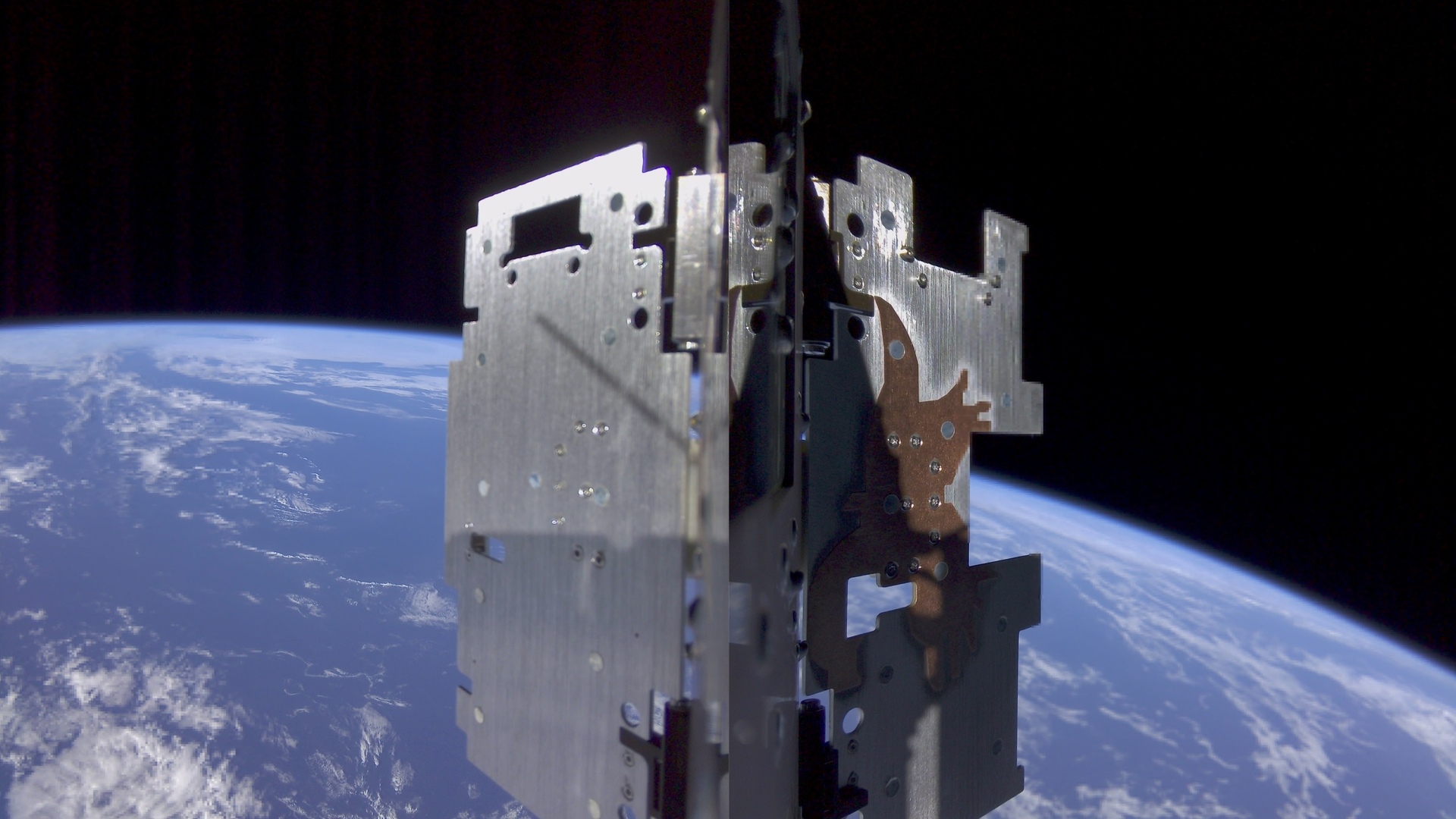






The deployment of the Italian IRIDE constellation proceeds with the launch of eight additional Eaglet II satellites, just four months after the first eight satellites were launched in November 2025. IRIDE is an initiative within the programme promoted by the Italian Government and coordinated by the European Space Agency (ESA), with the support of the Italian Space Agency (ASI).
The new Eaglet II satellites are designed, integrated, tested and operated by OHB Italia, which also hosts the related Control Centre (Flight Operations Segment).
With this new launch, the Eaglet II constellation, now counting 16 satellites in orbit, represents one of the six constellations composing the IRIDE programme and further expands its contribution to the overall system. The full deployment of Eaglet II is planned for 2026, with the launch of eight additional satellites.
The satellites were launched aboard the Transporter-16 rideshare mission with SpaceX from Vandenberg Space Force Base in California. Following separation operations, the OHB Italia Mission Control Center in Rome successfully acquired the satellites’ signals, initiating the in-orbit commissioning activities.
The IRIDE programme is funded through an investment of over one billion euros from Italy’s National Recovery and Resilience Plan (PNRR) and national funds. It is structured as a “constellation of six constellations”, composed of satellites with heterogeneous technologies and capabilities, supported by ground operational infrastructures dedicated to the generation of geospatial data. In addition to providing services to the Italian public administration, IRIDE aims to support Civil Protection and other authorities in mitigating hydrogeological risks and wildfires, safeguarding coastlines, monitoring critical infrastructure, air quality and weather conditions. The programme will also deliver analytical data to foster the development of commercial applications by start-ups, small and medium-sized enterprises, and industry players.
The Eaglet II satellites represent a new generation of compact Earth Observation platforms. With a total mass of approximately 25 kg, these minisatellites embark optical sensors for RGB image acquisition and integrate AIS signal reception and retransmission capabilities for vessel tracking, ensuring persistent surveillance and very rapid response times.
«The launch of the Eaglet II satellites within the IRIDE constellation represents another very important step for the programme, which now has twenty-four satellites in orbit,” said Simonetta Cheli, Director of Earth Observation Programmes at the European Space Agency (ESA) and Head of ESRIN. This second launch of the Eaglet II constellation has placed eight additional satellites into orbit, joining the eight launched on 28 November and enabling the achievement of the PNRR target seven months ahead of the required deadline. Considering also the eight satellites of the HEO constellation launched in the first half of 2025, IRIDE has now reached the milestone of 24 operational satellites in orbit, fully meeting the PNRR objective for the deployment of the constellations. The satellite data acquired will provide essential support for territory monitoring and protection, resource management and national security. IRIDE is the result of cooperation between the Italian Government, ESA, the Italian Space Agency and the entire national space industry. Reaching this new milestone has been possible thanks to the contribution of all the teams involved. I would like to extend my congratulations in particular to OHB Italia, Telespazio, OPTEC, Aresys, and to all the companies engaged in the development of the constellation, as well as, of course, to my own team overseeing its implementation. The constellations will be completed with further Eaglet II and HEO launches scheduled throughout the year and, starting from 2027, will be complemented by new IRIDE constellations developed by other industrial groups, further expanding the programme’s capabilities».
Teodoro Valente, President of the Italian Space Agency, commented:
«The IRIDE constellation is progressing in line with the established objectives and is consolidating Italy’s role and technological leadership in the field of Earth Observation. The synergy between the Italian Space Agency and the European Space Agency, supported by the expertise of our national space industry and the investments made by the Italian Government in this sector, is enabling us to develop a constellation that, with more than 60 new multi-sensor satellites distributed across several constellations, will be capable of addressing the key challenges related to monitoring and safeguarding our planet with ever more advanced solutions, while at the same time providing highly valuable services to the Public Administration. This new launch also represents an important step towards achieving the objectives already set out in the Government’s strategic guidelines for space and aerospace. The placement into orbit of these eight new satellites is even more significant as it demonstrates the ability of the Italian space system to meet the demanding timelines associated with the use of PNRR funds, despite the inherent complexity involved in developing a satellite asset».
«This new launch represents a further tangible step towards the full deployment of the Eaglet II constellation and confirms the strength of OHB Italia’s industrial contribution to Italy’s flagship national space programme, IRIDE,” said Ing. Roberto Aceti, Managing Director of OHB Italia. The continuity of launches, adherence to the schedule and the satellites’ performance demonstrate the technological maturity achieved and our ability to turn a strategic vision into an operational system serving the country. This challenging objective has also been made possible thanks to the outstanding professionalism of our entire network of partners and subcontractors, who have supported and worked alongside us throughout the implementation process. IRIDE is not merely a space mission, but an enabling infrastructure for Italy’s security, sustainability and competitiveness, both today and in the long term».